From Bottleneck to Benchmark: Automating Diabetic Eye Care in the EHR

Diabetic retinopathy remains the leading cause of preventable vision loss, yet millions of people with diabetes miss their essential annual retinal exam. For most healthcare systems, the challenge isn’t awareness - it’s workflow.
Traditional screening often relies on external referrals, requiring additional appointments and complex coordination between primary care providers and eye care specialists. These barriers create a ‘specialist bottleneck’, leaving patients at risk of preventable vision loss.
By integrating autonomous AI diagnostic screening directly into the electronic health record (EHR), diabetic eye exams transform from a logistical hurdle into seamless, 1-minute prevention.
Why EHR Integration Matters
The EHR is the backbone and central hub of modern healthcare, enabling providers to manage patient information, place orders, and coordinate care. Integrating new diagnostic tools directly into the EHR allows providers to adopt them seamlessly, without adding extra steps or disrupting clinical workflows. This is especially critical for diabetic retinopathy screening. While primary care providers manage patients with diabetes, retinal exams often require separate visits to eye care specialists.
By embedding AI screening directly into the patient’s charts, exams can be performed during routine visits. Results are documented immediately, and follow-up care can be triggered instantly, ensuring early detection and timely treatment.
AEYE-DS Integration with Epic and Other EHRs
AEYE-DS is the only FDA-cleared autonomous AI solution for diabetic retinopathy diagnosis using handheld or tabletop cameras. It integrates with Epic, one of the most widely used EHR platforms in the United States, as well as other leading EHR systems, allowing the entire screening process to be automated while the patient is in the waiting room.
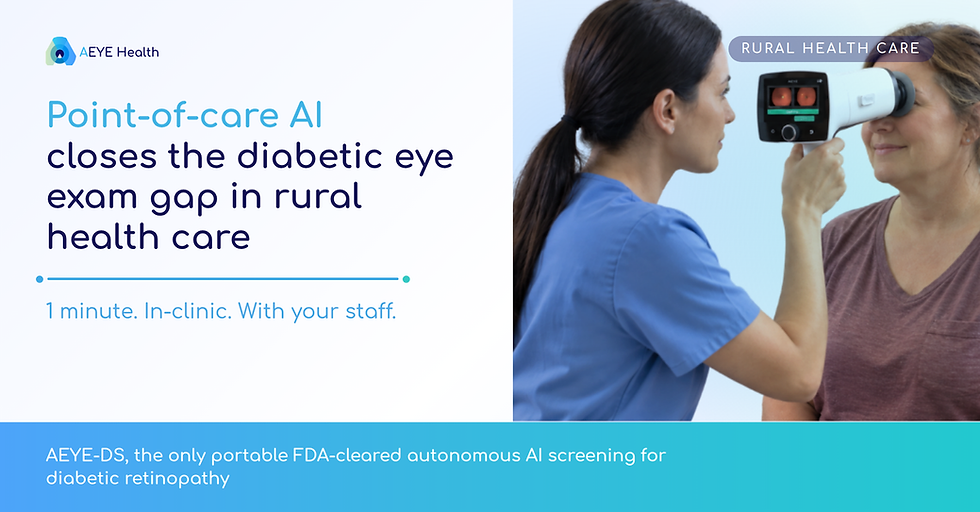
During a routine visit, the EHR identifies the care gap and prompts the care team to perform the screening during the initial “rooming” process. A nurse or medical assistant performs the 1-minute exam, capturing one image per eye with a retinal camera. AEYE-DS delivers an instant diagnostic result and automatically records the diagnosis in the patients’ chart. This allows providers to discuss the results with patients during the same routine visit.
If a positive case is detected, a referral can be triggered immediately, accelerating treatment for patients without manual paperwork. Additionally, completing the exam automatically triggers the billing process for the dedicated CPT code 92229, supporting efficient care gap closure and reporting.
Closing Care Gaps and Improving Quality Measures
Integrating AI screening into the EHR helps health organizations improve adherence to recommended screening guidelines. By embedding screening into routine visits, clinics can close care gaps and improve HEDIS quality measures. Additionally, completing the exam automatically triggers the billing of the dedicated CPT code 92229 for autonomous AI exams, supporting reimbursement and making workflow integration seamless for healthcare teams.
This integration demonstrates how autonomous AI can be embedded into everyday clinical practice, transforming diabetic eye care and helping prevent vision loss for millions of people living with diabetes.